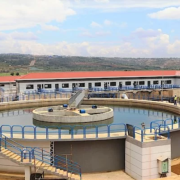
Characterization of Brewery Wastewater for Reuse in Kigali, Rwanda

Characterization of Brewery Wastewater for Reuse in Kigali, Rwanda


Abstract:

Like many developing countries, Rwanda is grappling with water shortages in the face of both increased urbanization and industrialization.

Other options that will provide water for industrial activities without necessarily tapping into new water sources must be explored.

This study investigates the prospects of wastewater re-use using a case study of Bralirwa soft drink factory (BSDF) in Kigali City, Rwanda.

From August 2009 to January 2010, laboratory experiments were conducted at both Bralirwa wastewater treatment plant laboratory and National University of Rwanda water laboratory.

The main objective was to characterize wastewater from BBSDF so as to determine its reuse options.

The parameters analyzed included Temperature (T), Total Dissolved Solids (TDS), Total Suspended Solids (TSS), Turbidity, Ammonium Nitrogen (NH 4 -N), Total Nitrogen (TN), Total Phosphorus (TP), Chemical Oxygen Demand (COD), Biological Oxygen Demand (BOD 5 ), Electro-Conductivity (EC), Salinity, equivalent OH- and Residual Chloride.

The Bralirwa soft drink factory wastewater removal efficiencies for TSS, BOD 5 , EC, TDS, NH 4 N, TP, Residual Chloride, and equivalent OH-, was 72%; 93%; 30%; 25%; 78%; 30%; 84% and 92%, respectively.

Based on recommended Rwandan wastewater quality re-use standards, this study concluded that Bralirwa wastewater re-use options are lawn irrigation, agricultural irrigation, factory reuse etc.

Keywords: Brewery wastewater, removal efficiencies, Rwanda, wastewater treatment, wastewater reuse, water quality.

Beneficiation of water works sludge for environmental sustainability

Beneficiation of water works sludge for environmental sustainability


Abstract

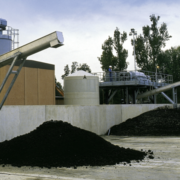
Water Works Sludge collected from a water treatment plant was beneficiated for environmental sustainability.

The steps considered were gravity thickening and air drying incorporating mechanical agitation. Results of tests conducted showed that the combined effects of temperature, relative humidity, wind speed and sun intensity affect the dying rate of sludge.

Additionally, high solid content of 80% was achieved at a reduced time using drying bed which was high compared to the value from other dewatering processes.

This study showed that water works sludge consists of typical oxides of alumina and silica, and can be properly managed in the environment through the manipulation of process parameters and incorporation of mechanical agitation that cushion the effect of sludge depth while improving the performance of drying bed.

Considering the high potentials for resource utilization, sludge can be adopted as secondary raw material for building, construction and mining industries, while checking the menace of environmental
degradation.

Keywords: Sludge; beneficiation; environmental sustainability; drying bed; dewatering.

Wastewater Management in Third World Cities: Case Study of Cotonou, Benin

Wastewater Management in Third World Cities: Case Study of Cotonou, Benin


Abstract
Poor wastewater management coupled with lack of sanitation facilities has aggravated the sanitation challenges in developing countries.

This study was aimed at providing information on the current state of sanitation in Cotonou City through surveys.

The most common sanitation facilities in the city were septic tanks, latrines and soakaway pits.

Mechanical desulging was mainly used (94%) for desludging latrines and septic tanks with a frequency of less than once a year for 73% of the houses; manual desludging was most common for soakaway pits. 84% of sullage generated is disposed without treatment.

The only existing stabilization pond plant, managed by a private company SIBEAU, is overloaded; the effluent is poor (up to 2250mg/l BOD5 ) and does not meet any quality standards. 96% of survey respondents recognise that the sanitation situation in the city is
not good; it has to be improved by providing an appropriate and sustainable sanitation management system.

Keywords

Urban Sanitation, Septic tanks, Soakaway Pits, Latrines, Desludging, Wastewater Treatment,
Developing World Cities


Environmental impact of wastewater discharges from FERMENCAM

Environmental impact of wastewater discharges from FERMENCAM


Abstract: This study aims to assess the environmental impact of wastewater discharges from FERMENCAM.

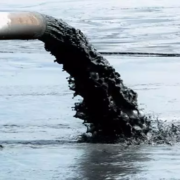
Effluent and wastewater samples were collected respectively at the plant outlet and in the receiving environment, and
physico-chemical analyses carried out revealed an organic pollution with a high pollution load that can be observed by
phosphate levels in water at the plant outlet.

Biochemical oxygen demand (BOD5) is high at the plant outlet (20300 mg of O2 / L) and 16200 mg of O2 / L are found in the receiving environment.

The BOD5/COD (chemical oxygen demand) ratio of effluents discharged by FERMENCAM and that of the receiving environment is 0.90. This value is higher than 0.5, meaning that the organic matter of both effluents is highly biodegradable.

The results show that the increase in conductivity and decrease in total dissolved salts are due to an excessive mineralization of organic matters.

The results show that the chlorophyll synthesis in Amaranthus viridis leaves is linked to the quality of the environment, and that is why such leavescan easily adapt to the polluted environment.

In short, the wastewater impact on water quality of the receiving environment is evident, and these data will allow better environmental protection, thus promoting the development of various waterfront activities.

In addition, the need for sustainable wastewater management (wastewater treatment plants, pre-treatment of industrial waters and sensitization) in the study area proves to be vital and urgent in order to improve wastewater quality and contribute to improving the state of the environment.

Keywords: Wastewater, Physico-Chemical Pollution, FERMENCAM, Environmental Impact.

GESTION DES DÉCHETS LIQUIDES DOMESTIQUES, UN PROBLÈME ENVIRONNEMENTAL ET SOURCE DE NUISANCES SANITAIRES AU QUARTIER BROMAKOTÉ DANS LA VILLE DE BOUAFLÉ

GESTION DES DÉCHETS LIQUIDES DOMESTIQUES, UN PROBLÈME ENVIRONNEMENTAL ET SOURCE DE NUISANCES SANITAIRES AU QUARTIER BROMAKOTÉ DANS LA VILLE DE BOUAFLÉ


RÉSUMÉ
La gestion des déchets liquides domestiques en milieu urbain est un véritable problème pour les populations.

C’est l’exemple de la ville de Bouaflé où la mauvaise gestion des déchets ménagers constitue une source de dégradation du cadre de vie des populations, les exposant à de multiples risques sanitaires. Bromakoté, l’un des quartiers de Bouaflé, fait face à cette situation, du fait du
manque d’infrastructures d’assainissement.

Cet article veut montrer les risques de maladies environnementales qui résultent de la mauvaise gestion des eaux usées domestiques. La méthodologie adoptée intègre la recherche documentaire et les enquêtes de terrain.

La recherche bibliographique a permis de faire le point des documents qui traitent de la mauvaise gestion des eaux usées domestiques
en milieu urbain.

L’enquête de terrain a pris en compte l’observation directe et l’enquête auprès de 102 chefs de ménages. Les résultats obtenus montrent que les rues du quartier, sont les principaux lieux de rejet (68,63%) des eaux de lessive et de vaisselle.

Elles sont également utilisées comme lieux d’évacuation des eaux vannes par 38,24% des ménages du quartier.

La dissémination des points d’eaux usées domestiques expose les populations à d’énormes maladies environnementales dont les plus
fréquentes sont le paludisme (69%) et la grippe (18%).

Les enfants de moins de 5 ans sont les plus exposés avec 40,20%, suivis des personnes dont l’âge est compris entre 6 et 15 qui enregistrent 27,45% des cas de maladies.

L’éducation et la sensibilisation en matière de gestion efficace de l’environnement sont nécessaire pour le bien-être des populations de Bromakoté à Bouaflé.

MOTS-CLÉ : Côte d’Ivoire ; Bouaflé ; Déchets liquides domestiques ; Gestion ; Nuisances sanitaires.

ABSTRACT
The management of liquid domestic waste in urban areas is a real problem for local people. This is the case in the town of Bouaflé, where poor management of household waste is a source of deterioration in people’s living environment, exposing them to numerous health risks. Bromakoté, one of Bouaflé’s neighbourhoods, is faced with this situation because of the lack of sanitation infrastructure.

The aim of this article is to show the risks of environmental diseases resulting from the poor management of
domestic wastewater.

The methodology adopted includes documentary research and field surveys.

The literature search provided an overview of documents dealing with the poor management of domestic wastewater in urban areas.

The field survey involved direct observation and interviews with 102 heads of household. The results show that neighbourhood streets are the main dumping grounds (68.63%) for laundry and washing-up water.

They are also used for black water disposal by 38.24% of households in the neighbourhood. The spread of domestic sewage points exposes people to huge environmental diseases, the most common of which are malaria (69%) and influenza (18%).

Children under 5 are most at risk, with 40.20%, followed by people aged between 6 and 15, who account for
27.45% of cases.

Education and awareness-raising on effective environmental management are necessary for the well-being of the people of Bromakoté in Bouafle

KEYWORDS : Côte d’Ivoire; Bouafle; Domestic liquid waste; Management; Health risks

Logiques d’Acteurs dans la Gestion des Eaux usées et Assainissement dans la Commune d’Arrondissement de Bafoussam 1er (Ouest-Cameroun)

Logiques d’Acteurs dans la Gestion des Eaux usées et Assainissement dans la Commune d’Arrondissement de Bafoussam 1er (Ouest-Cameroun)


Résumé
La gestion des eaux usées est devenue une préoccupation importante voire primordiale de la vie quotidienne dans le monde entier. Les conditions d’hygiène et de salubrité se dégradent progressivement dans les villes camerounaises.

La démographie galopante et l’urbanisation non maitrisée viennent fragiliser les systèmes de gestion des déchets existants.

L’objectif visé est de montrer comment la gestion des eaux usées par les différents acteurs peut contribuer à l’assainissement de Bafoussam 1er. Pour l’atteindre, la méthode hypothético-déductive a permis à partir des diverses sources, mais surtout d’une enquête auprès de 106 ménages, de confronter les hypothèses de départ à la réalité de terrain.

Les informations sur les maladies liées à la vie dans un environnement insalubre et sur la consommation d’une eau de mauvaise qualité recueillies dans les ménages ont été complétées par celles collectées dans les centres de santé et les analyses physico-chimiques et
bactériologiques de 6 échantillons d’eau usée prélevés.

Il ressort de cette étude que les tentatives initiées par les ménages n’apportent très souvent que des solutions provisoires et laissent ressortir des dispositifs rudimentaires dont leur état de fonctionnement constitue en soi une source de pollution.

Les dysfonctionnements des systèmes d’assainissement entrainent la pollution des eaux de surface, des eaux souterraines, du sol et de la qualité de l’air.

La récurrence des maladies (paludisme, fièvre typhoïde, diarrhée etc.) fortement dénombré dans les formations sanitaires sont liées à l’hygiène défectueuse et l’insalubrité.

Le succès de la maitrise des techniques de gestion des eaux usées et de l’assainissement serait efficace avec la participation de tous les acteurs.

Mots-clés: Logiques d’acteurs, eau usée, assainissement, urbanisation, Bafoussam 1er


Abstract
The management of waste water has become an important and even paramount concern in daily life all over the world. Hygiene and sanitation conditions are gradually deteriorating in Cameroonian cities.

Population explosion and the uncontrolled urbanization are weakening the existing waste management systems. The goal of this study is to show how waste water management by different stakeholders can contribute to the sanitation of Bafoussam I.

To achieve this goal, the hypothetico-deductive method is used to compare the initial hypotheses with the reality on the ground, based on
various sources and especially a survey of 106 households.

The information on diseases related to living in unsanitary conditions and on drinking poor quality water collected in households was complemented by information collected in health centres and physical-chemical and bacteriological analyses of 6 samples of waste water taken.

These findings indicate that the attempts initiated by households very often bring only temporary solutions and reveal
rudimentary facilities whose state of operation constitutes in itself a source of pollution.

The malfunction of sanitation facilities leads to the pollution of surface water, groundwater, soil and air quality. Repeated illness (malaria,
typhoid fever, diarrhoea, etc.) that are highly prevalent in health facilities are linked to defective hygiene and insalubrity.

The successful mastery of waste water management techniques and sanitation would be effective with the participation of all stakeholders.

Keywords:Actors’rationales, waste water, sanitation, urbanization, Bafoussam 1


Logiciel de diagnostic automatique pour le traitement primaire et les boues activées : vers une gestion intelligente des eaux usées au Maroc

Logiciel de diagnostic automatique pour le traitement primaire et les boues activées : vers une gestion intelligente des eaux usées au Maroc


Le Maroc, confronté à une rareté croissante de l’eau due au stress hydrique et au changement climatique, explore activement des
solutions comme le dessalement et la réutilisation des eaux usées.

Cependant, le développement de ces alternatives est entravé par des défis significatifs. Les capacités de traitement actuelles
sont dépassées par le volume croissant d’eaux usées, aggravant la situation de stations d’épuration souvent obsolètes.

Pour remédier à cela, un diagnostic approfondi des stations d’épuration doit être effectué ; dans un précédent article cela était appliqué
au niveau du prétraitement.

Pour compléter cette démarche et garantir une gestion efficace des eaux usées, il est indispensable d’étendre le diagnostic à l’étape cruciale du traitement primaire, en particulier dans les stations utilisant le procédé des boues activées.

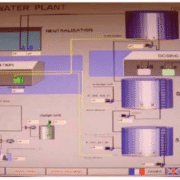
Afin d’automatiser les résultats, un code programme [ou logiciel] de diagnostic a été élaboré sur Visual studio en suivant rigoureusement les étapes spécifiées pour chaque scénario, conformément aux organigrammes des divers éléments de la station d’épuration.

Cette application permet la saisie de données, le calcul des équations et donne les instructions à suivre.

Le diagnostic identifie les points critiques et guide une optimisation globale du traitement des eaux usées selon trois axes : évaluation
des infrastructures, analyse de l’efficacité des procédés de traitement et amélioration des pratiques de suivi et d’entretien.

Mots clés : Réutilisation des eaux usées, stations d’épuration, diagnostic, prétraitement, traitement primaire, boues activées, Visual Studio, code, automatisation, organigrammes, saisie de données, optimisation, surveillance.


Morocco, facing increasing water scarcity due to water stress and climate change, is actively exploring solutions such as desalination and
wastewater reuse.

However, the development of these alternatives is hindered by significant challenges.

Current treatment capacities are overwhelmed by the growing volume of wastewater, exacerbating the situation of often obsolete
sewage treatment plants.

To address this, a thorough diagnostic of sewage treatment plants needs to be conducted; in a previous article, this was applied at
the pretreatment stage.

To complete this process and ensure effective wastewater management, extending the diagnostic to the critical primary treatment stage,
particularly in plants using


Gestion des eaux usées et nuisances sanitaires dans les cadres de vie des populations d’Abobo-Kennedy-Clouetcha (Abidjan, Côte d’Ivoire)

Gestion des eaux usées et nuisances sanitaires dans les cadres de vie des populations d’Abobo-Kennedy-Clouetcha (Abidjan, Côte d’Ivoire)


Résumé
La gestion des eaux usées reste une préoccupation pour les populations d’Abidjan et particulièrement celles du quartier d’Abobo-Kennedy-Clouetcha.

Face à leur difficile gestion, les populations sont confrontées de manière quotidienne à des nuisances dans leurs cadres de vie.

Cette étude visait à montrer les nuisances auxquelles les populations du quartier sont exposées du fait de la difficile
gestion des eaux usées.

Les résultats issus de la recherche documentaire et des enquêtes de terrain montrent que le quartier Kennedy-Clouetcha présente de nombreuses nuisances du fait de la défaillance du système d’assainissement.

Les infrastructures d’assainissement restent inadaptées au regard de la production des eaux usées qui proviennent des lessives, des vaisselles et des toilettes des ménages.

Sur les 189 chefs de ménages enquêtés, 63,5% évacuent directement leurs eaux usées dans la rue.

Les latrines sèches (46%) constituent les principaux lieux d’aisance des chefs de ménages.

Concernant les modes de vidanges des fosses septiques, 54,5% des chefs de ménages enquêtés ont recours aux camions de vidanges et 35,7% font appel à des puisatiers manuels qui dans leur procédé, transfèrent les déchets dans un nouveau trou creusé devant les habitats à l’air libre.

Le quartiersouffre aussi d’un manque notoire de réseau de canalisation pour le drainage des eaux pluviales.

Dans ces conditions, les populations ressentent des nuisances dans leurs cadres de vie.

Les chefs de ménages enquêtés évoquent des problèmes de santé (34%), des odeurs nauséabondes (27%) et des gènes de moustiques (21%). Parmi les maladies qui affectent les membres des chefs de ménages enquêtés, le paludisme (78,8%), les maladies diarrhéiques (7,4%), les IRA (5,8%), les dermatoses (2,6%) et la fièvre typhoïde (2,6%) étaient les plus cités.

La transmission et la propagation de ces maladies, ont un lien avec la déficience du système de gestion des eaux usées.

Mots-clés : Abobo, Kennedy-Clouetcha, eaux usées, infrastructures d’assainissement, nuisances.


Abstract
The management of worn water remains a concern for the populations of Abidjan and particularly those of Abobo-Kennedy-Clouetcha. Visa-vis their difficult management, the populations are confronted in a daily way with harmful effects in their qualities of life.

This study aimed at showing the harmful effects to which the populations of the district are exposed because of the difficult
management of worn water.

The results resulting from the information retrieval and the investigations of ground show that the Kennedy-Clouetcha district presents many harmful effects because of the failure of the system of cleansing.

The infrastructures of cleansing remain unsuited in comparison with the production of worn water which comes from the detergents, the crockery and the toilets of the households. On the 189 heads of surveyed households, 63.5% directly evacuate their
water used in the street.

The latrines dry (46%) constitute the principal toilets of the heads of households. Concerning the modes of drainings of the septic tanks, 54.5% of the heads of surveyed households have recourse to the trucks of drainings and 35.7% call upon manual shaft sinkers who in
their process, transfer waste in a new hole dug in front of the habitats to the free air.

The district also suffers from a notorious lack of network of drain for the drainage of rain water. Under these conditions, the populations feel harmful effects in their qualities of life. The heads of surveyed households mention problems of health (34%), nauseous odors (27%) and genes of mosquitos (21%).

Among the diseases which assign the members of the heads of surveyed households, malaria (78.8%), the diarrheal diseases (7.4%), the Acute Respiratory Infections (5.8%), the dermatoses (2.6%) and the typhoid fever (2.6%) were quoted.

The transmission and the propagation of these diseases, have a bond with the deficiency of the system of management of worn water.

Keyword: Abobo, Kennedy-Clouetcha, used water, infrastructures of cleansing, harmful effects.

Evaluation “One Health” de l´état de la gestion des excréta et des eaux usées domestiques dans la ville de Kindu (République Démocratique du Congo)

Evaluation “One Health” de l´état de la gestion des excréta et des eaux usées domestiques dans la ville de Kindu (République Démocratique du Congo)


Introduction: la mauvaise gestion des eaux usées domestiques, des excréta humains et des excréments d’animaux conduit, d’une part, à la
contamination du sol, des sources d’approvisionnement en eau potable et d’autre part, risque de constituer un foyer de prolifération
et de propagation d’infections de la part de certaines espèces de mouches; et d’attirer ainsi d’autres insectes, les rongeurs, la vermine
susceptibles de créer une gêne intolérable.

Cette étude visait à évaluer les aspects liés à l’eau, à l’hygiène et à l’assainissement pour les personnes et des animaux dans trois communes de la ville de Kindu et d’identifier la commune avec le plus faible pourcentage sur la gestion des excréta et des eaux usées ménagères.

Méthodes: une étude transversale a été menée en avril 2024 à Kindu.

Cette étude transversale analytique a utilisé l’enquête ménage pour collecter des données.

Les ménages ont été sélectionnés au hasard et 422 hommes et femmes chefs de ménage et/ou répondants majeurs ont accepté de participer.

Une analyse statistique descriptive a été suivie pour déterminer les fréquences et les pourcentages.

L’analyse bivariée a été utilisée pour trouver les différences des variables entre les communes.

Résultats: presque tous les ménages (93,1%) ont déclaré la présence d’une latrine, le plus souvent des latrines à fosse (p=0,000).

A peu près 47,2% ont affirmé avoir partagé leurs latrines avec d’autres ménages (p=0,167). Au plus 58,9% des ménages vident manuellement leurs fosses septiques 12,1% ouvrent des tuyaux dans la nature (p=0,291).

Le mode d’évacuation des eaux usées principalement utilisé par les ménages a été le caniveau d’eau pluvial (46,3%) (p=0,002); 40,5%
des ménages vivent et/ou élèvent les animaux dans leurs ménages.

Conclusion: nous sommes arrivés aux conclusions selon lesquelles, les ménages humains et animaux de la ville de Kindu
connaissent des lacunes dans la gestion des excréta et des eaux usées domestiques et leur accès aux services “Water, sanitation and hygiene”
(WASH).

La commune d’Alunguli connaissant l’accès global le plus médiocre.

Des efforts supplémentaires sont nécessaires pour améliorer l’accès à un service minimum d’assainissement et de l’hygiène, en particulier dans la commune d’Alunguli.

Introduction: poor management of domestic wastewater, human excreta and animal waste leads, on the one hand, to the contamination of
soil and drinking water sources and, on the other hand, poses a risk of becoming a breeding ground for the proliferation and spread of infections by certain species of flies, and of attracting other insects, rodents, and vermin that can cause significant nuisance.

The purpose of this study was to evaluate the aspects related to water, hygiene, and sanitation for people and animals in three
districts of the city of Kindu, and to identify the district with the lowest performance in the management of excreta and household
wastewater. Methods: we conducted a crosssectional study in Kindu in April 2024.

This analytical cross-sectional study used household surveys to collect data.

Households were randomly selected, and 422 male and female household heads and/or adult respondents agreed to participate.

Descriptive statistical analysis was used to determine frequencies and percentages.

Bivariate analysis was used to identify differences in variables between the districts.

Results: almost all households (93.1%) reported having a latrine, most often pit latrines (p=0.000); 47.2% stated that they shared their latrines with other households (p=0.167); 58.9% of households emptied their septic tanks manually, and 12.1% discharged wastewater directly into the environment (p=0.291).

The primary method of wastewater disposal used by households was rainwater gutter (46.3%) (p=0.002); 40.5% of households lived with and/or raised animals within their premises.

Conclusion: we have come to the conclusion that human and animal households in the city of Kindu have gaps in the management of

excreta and domestic wastewater and their access to WASH services.

The district of Alunguli has the poorest overall access. Additional efforts are needed to improve access to minimum sanitation and hygiene services, particularly in the district of Alunguli.

Key words: Excreta, wastewater, one health, sanitation, Kindu, Democratic Republic of Congo
Assessment of Wastewater Management Practices in Kigali City, Rwanda

Assessment of Wastewater Management Practices in Kigali City, Rwanda


Abstract:

This study aimed to assess the current wastewater management practices in the City of Kigali (CoK).

It focused on the quantification of household wastewater production, estimation of its quality, and the development of practical
strategies for sustainably managing the wastewater, now and into the future.

It is based on data on population, water supply and on data from questionnaire surveys carried out which are used to assess and derive figures on water consumption, unit wastewater production by the three different residential categories according to dwelling type and household income; these are high, medium and low standings.

Three samplings runs were conducted in order to assess the quality of waste- water.

The average water consumption was found to be 184 l/ca.d for high standing, 57 l/ca.d for medium standing, and
20 l/cap.d for low standing dwellings.

The respective return flows (or wastewater discharge coefficients) were found to be 0.52, 0.68 and 0.75.

For the monitored main parameters of pH, conductivity, Dissolved Oxygen, Total Dissolved Solids, Chemical Oxygen Demand, Total Nitrogen, and Total Phosphorous, the effluent quality far exceeded the limits for effluents discharged into sensitive waters.

It is recommended that all concerned institutions and key stakeholders should work together in formulating an appropriate wastewater management strategy, with special emphasis on decentralized sanitation, reuse of wastewater components wherever possible, and cleaner production in industries.

Keywords: City of Kigali, water consumption, wastewater generation, wastewater management strategies, urban wastewater
management, wastewater reuse.