Six takeaways identified by the All Systems Go Africa symposium for accelerating progress in the WASH Agenda across the African continent

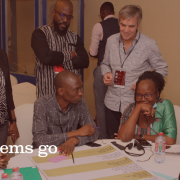
This three-day All Systems Go Africa symposium was convened by IRC, in collaboration with UNICEF and the Government of the Republic of Ghana who also hosted the event. Between 19 and 21 October 2022, the event brought together over 250 participants, with delegations from 25 African countries, at the Kempinski Hotel. Participants comprised political leaders, professionals, government officials, academia, NGOs, private sector, donors and regional institutions – including the African Ministers’ Council on Water (AMCOW), the African Development Bank (AfDB), the African Water Association (AfWA), and the African Civil Society Network on Water and Sanitation (ANEW). The symposium examined the lessons learned from the review of progress and the critical changes needed to achieve the water, sanitation and hygiene targets in Africa. The key takeaways from this workshop are available here.
Setting Up a Community of Practice (CoP) on Earth Observation Technologies

As part of the International Water Association (IWA) World Water Congress & Exhibition held from September 11th to 15th, 2022, experts from the PrimeWater Consortium (EMVIS S.A & EOMAP), DHI Water & Environment, Australian Water Partnership (AWP) and African Water Association (AfWA) organized on September 12th, 2022, a session themed “Earth Observation Technologies for Water Management: Building a Community of Practice” to give a background on the Earth Observation (EO) Community of Practice (CoP) and showcase the uses and applications of EO in water management in different cases and contexts. This workshop allowed to develop a call to action on what can be done practically in terms of Knowledge, technology, regulation, etc. for addressing the barriers that were previously identified and creating opportunities for the uptake of earth observations tools and services. Read the session conclusions below.


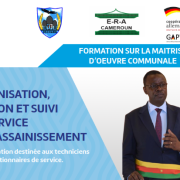
Training in Municipal WaSH Project Management in Dschang, Cameroon

In collaboration with the German-African Partnership for Water and Sanitation (GAPWAS), the African Water Association (AfWA) organized from 10 to 13 October 2022 in Dschang, Cameroon, a training session on Water & Sanitation Technical Project Management at the Municipal level. This workshop aimed at sharing good practices from North-South partnerships on the regulatory and operational dimensions of municipal project management.

This training session effectively strengthened the capacities of technicians within the municipalities, decentralized technical government services, delegated managers and support operators (NGOs, projects, programs, consultancy office) so that they can fully play their role under the efficient supervision of elected representatives. At the end of this four- (04) day session, the participants were able to present the post-training action plans developed under the working groups, whose implementation will help improve the water and sanitation public service quality.

This document presents examples of action plans developed.

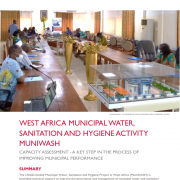
CAPACITY ASSESSMENT – A KEY STEP IN THE PROCESS OF IMPROVING MUNICIPAL PERFORMANCE

The USAID-funded Municipal Water, Sanitation and Hygiene Project in West Africa (MuniWASH) is providing technical support to improve the governance and management of municipal water and sanitation services in 16 target municipalities in Benin and Côte d’Ivoire . To serve as a reference framework for the municipal capacity building program, the USAID MuniWASH project provides these target municipalities with a governance tool called the Institutional Strengthening Index (ISI). This tool is deployed in a three-step process as follow:
1. The municipalities self-assess their performance in providing Water and Sanitation services to their constituents.
2. Based on the findings of these self-assessments, the municipalities develop strategic Institutional Strengthening Plans (ISPs) to fill the capacity gaps identified.
3. Finally, the municipalities implement the ISPs for improved service performance.
During the assessment phase conducted in FY2021, the ISI identified deficiencies at the organizational and regulatory levels and in planning, citizen engagement, data management, and others. This learning note presents lessons learned during the initial application of the ISI in partner municipalities.

Download Here

Achieving universal coverage through Africa Sanitation Policy Guidelines

On the 10th of June, 2021, the African Council of Ministers on Water (AMCOW) launched the African Sanitation Policy Guidelines (ASPG), a new initiative to help improve national and subnational sanitation and hygiene policy across the continent.
The ASPG aim to ease the process of resolving country-level enabling environment bottlenecks that stand in the way of African governments in meeting their national, regional, and global sanitation and hygiene obligations. They provide direction in functional policy drafting, broad stakeholder engagement, monitoring, and generic technical content specific to sanitation and hygiene service provision. They are applied for review, revision, and development of sanitation policies and implementation strategies.

Download Here

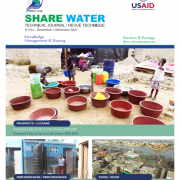
SHARE WATER Issue 12

This twelfth issue of AfWA Technical Journal addresses water security and the mechanisms/technologies to implement for universal access to water and sanitation for African populations, including a case study of the NGO Eau et Vie in Abidjan over the five years of intervention from 2016 to 2021. This study explains how to activate institutional and technical levers to enable vulnerable populations in disadvantaged neighbourhoods to have access to drinking water at lower connection costs. This innovative approach could help reduce unbilled water while giving economically weak populations back their dignity. A success story from the Chairperson of the Kenya Professional Women’s WASH Network, Dr. Leunita SUMBA, PhD on her commitment to women’s leadership and gender is also highlighted in this issue.

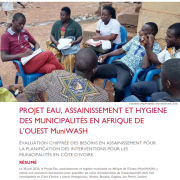
COST NEEDS ASSESSMENT FOR PLANNING SANITATION INTERVENTIONS FOR MUNICIPALITIES IN COTE D’IVOIRE

On June 30th, 2020, the West Africa Municipal Water, Sanitation, and Hygiene (MuniWASH) Activity completed a needs assessment to quantify costs for sanitation improvements in eight municipalities in Côte d’Ivoire, which included Abengourou, Abobo, Bouaké, Gagnoa, San Pedro, Soubré, Yamoussoukro, and Yopougon.

The purpose of the assessment was to quantify the sanitation needs to achieve the national objective of “75% access to improved sanitation facilities in urban areas” by 2030, as outlined in the 2016 Sanitation and Drainage Sector Policy Letter approved by the Government of Cote d’Ivoire. As a result of the assessment, the estimated costs for onsite sanitation in these municipalities are approximately XOF 77.5 billion, which includes XOF 74 billion for the construction of 130,040 toilets and XOF 3.5 billion to acquire 77 emptying trucks. There are several key actors that support access to sanitation services at the household level including civil society organizations (CSOs), private operators, and local elected officials. The assessment found that each one has different perceptions of the approach needed to improve sanitation in the communities. CSOs placed emphasis on more toilets and sanitation infrastructure for households. Private operators highlighted the need for improved access to financing. Finally, the elected officials signaled the need for significant improvements in the institutional framework with more responsibility entrusted to them.

Download here

Regulation for non-sewer sanitation in Africa

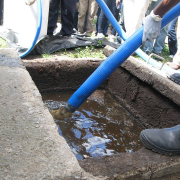
The initiative to involve the private sector began with the pilot program to structure the market for faecal sludge initiated in Senegal. Although this program was a success, some adjustments are currently needed. There has been significant progress in both the transport and management of stations, and many countries have undertaken reforms in this area. The current practices are ’copy & paste’ of the approaches used in Senegal in most countries with the same mistakes. This is the case in Niger, in Cameroon and will be the case in Benin. In all these countries where the involvement of the private sector is in place, the viability of the systems remains very problematic and there is an urgent need to make the necessary corrections to achieve the expected results. This Note explain how a better regulation is important for the sanitation sector in Africa.


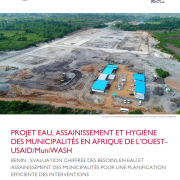
BENIN : EVALUATION CHIFFRÉE DES BESOINS EN EAU ET ASSAINISSEMENT DES MUNICIPALITÉS POUR UNE PLANIFICATION EFFICIENTE DES INTERVENTIONS

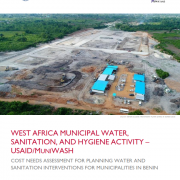
COST NEEDS ASSESSMENT FOR PLANNING WATER AND SANITATION INTERVENTIONS FOR MUNICIPALITIES IN BENIN